



How to maintain a long-lasting tan: recommended post-sun and after-dun tips

In this article, we will cover:
- Why your tan fades (and why understanding this helps)
- Watch your shower routine: this is where you may lose more of your tan than expected
- Diet and tanning: what you need to know
- Exfoliation: yes, but in moderation and at the right time
- The most common mistakes to avoid
- Don’t forget sun protection, even later in the season
- In summary
- Frequently asked questions about how to make your tan last longer
A tan doesn’t fade because of bad luck, but for a very simple reason: your skin renews itself. The cells in the outermost layer of the skin are gradually shed and replaced by new ones, while the pigment produced by the skin in response to sun exposure gradually decreases. This is a natural process that varies from person to person and cannot be completely stopped by any product. What you can do, however, is take care of your skin to keep it soft and hydrated, preventing dryness and flaking from making your skin tone look less even and your tan appear more faded. Let’s see how.
Why your tan fades (and why understanding this helps)
A tan is the result of the skin producing melanin in response to UV rays. Over time, however, the surface skin cells that have accumulated pigment are naturally shed as part of the skin’s normal renewal process.
For this reason, it is not possible to stop the skin’s natural turnover in order to maintain a tan indefinitely. However, certain habits can help preserve its appearance for longer, particularly by avoiding additional stress to the skin and preventing dryness.
Hydration is therefore one of the most important steps in a post-sun routine. Well-hydrated skin retains its softness and elasticity for longer and may be less prone to dryness and flaking. The best time to apply moisturizer is immediately after showering, while the skin is still slightly damp.
Face: the area that loses color first
The face is exposed all year round and tends to be more affected by the sun, heat, wind and changes in temperature. Cleansing too aggressively or following a routine that does not provide enough hydration can also increase dryness and make the appearance of your tan less even.
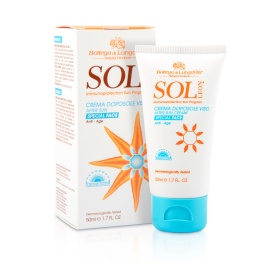
In this case, a specific after-sun cream can be a valuable addition to your regular routine. Bottega di LungaVita After-Sun Face Cream, for example, combines hyaluronic acid, green tea extract, shea butter and aloe vera gel in a lightweight texture that absorbs in just a few moments without feeling heavy. It is designed to help counteract dryness and the fine dehydration lines typically associated with sun-exposed skin and is recommended for use in the evening on thoroughly cleansed face and neck.
If you would like to create a complete facial routine for the warmer months, you can find all the steps in our guide to summer skincare.
Body: more hydration, with the same consistency
For the body, you simply need more product and the same commitment to consistency. After a day in the sun, the skin may feel drier and require more careful hydration.
Bottega di LungaVita After Sun Moisturizing Body Lotion, for example, is formulated with extracts of chamomile, mallow and calendula, walnut husk, carrot oil and vitamin E: ingredients that help restore softness and comfort to skin stressed by sun exposure. Its lightweight, non-greasy texture absorbs quickly, making it easy to incorporate into your daily routine. Applying it every evening, especially after showering, can become a simple but important step in keeping the skin soft for longer. There is no need to wait until dryness or flaking appears: consistency during the post-sun phase is more beneficial than occasional applications.
Watch your shower routine: this is where you may lose more of your tan than expected
Many people focus on moisturizing cream and forget that showering habits can also affect the condition of the skin. Water that is too hot can increase dryness, while vigorously rubbing the skin can encourage greater flaking.
Your choice of cleanser also matters: very aggressive products can contribute to skin dryness and compromise its natural protective barrier.
It is therefore better to:
- take short showers with lukewarm water, avoiding excessively high temperatures;
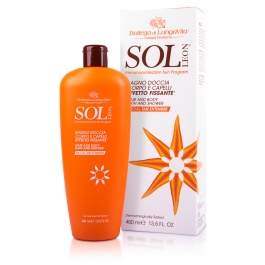
- choose a gentle cleanser designed for tanned skin: Bottega di LungaVita Hair and Body Bath and Shower, for example, contains extracts of chamomile, mallow, walnut husk and carrot. In addition to cleansing the body and hair while respecting their physiological pH, these ingredients help set and intensify the appearance of the tan;
- gently pat the skin dry with a towel rather than rubbing it;
- after swimming in the sea or pool, rinse thoroughly to remove salt and chlorine before cleansing: both can contribute to skin dryness, particularly when they remain on the skin for long periods.
Immediately after showering, it is a good habit to apply an after-sun product or moisturizer while the skin is still slightly damp, completing the routine with a simple and consistent step.
Salt and chlorine don’t only put your skin to the test: they can also affect your hair, which often feels drier and more damaged by the end of summer. If you would like to learn more, we have created a dedicated guide on how to protect your hair from the sun and sea.
Diet and tanning: what you need to know
Taking care of your skin after sun exposure doesn’t only mean focusing on what you apply externally. A varied and balanced diet also contributes to the overall well-being of the skin.
Fruit and vegetables rich in carotenoids, such as carrots, apricots, tomatoes, mangoes and peppers, provide important nutrients and can easily be incorporated into a summer diet. Beta-carotene, in particular, is a carotenoid that the body can convert into vitamin A, which also plays a role in maintaining healthy skin.
However, these foods should not be considered a treatment for prolonging a tan: no single food can replace a proper skincare routine or protection from UV rays.
Drinking regularly throughout the day also contributes to the body’s hydration and the well-being of the skin. However, fluid requirements vary from person to person and also depend on temperature, diet and physical activity.
Exfoliation: yes, but in moderation and at the right time
Scrubs are useful for keeping the skin smooth and even, but they should be used carefully, particularly when the skin has been exposed to the sun. Exfoliating too frequently or aggressively can increase dryness and irritate skin that is already stressed.
For this reason, it is best not to overuse scrubs during periods of intense sun exposure or immediately afterwards, especially if the skin is red, sensitive or prone to flaking.
On already tanned skin, a gentle scrub does not “erase” your tan, but aggressive exfoliation can accelerate the removal of surface skin cells and make the color appear less intense. If you want to exfoliate during this period, it is better to choose gentle products and apply them using light movements, always taking the condition of your skin into account.
The most common mistakes to avoid
Some seemingly harmless habits can contribute to making the skin drier and cause the even appearance of your tan to fade more quickly:
- taking showers or baths with very hot water;
- neglecting post-sun hydration and waiting until the skin starts to feel tight or begins to flake;
- rubbing the skin with a towel instead of gently patting it dry;
- using cleansers that are too aggressive or exfoliating too frequently;
- using exfoliating products or intensive treatments while the skin is still sensitive from sun exposure;
- wearing swimsuits or clothing soaked with salt water for hours without rinsing the skin after swimming in the sea.
Don’t forget sun protection, even later in the season
A common mistake is to stop using sunscreen once you have “got your tan.” In reality, being tanned does not mean that your skin is protected from UV rays. Sun protection should therefore be used every time you are exposed to the sun, choosing an SPF suitable for your skin type and the conditions of exposure.
Continuing to protect your skin is important even in the weeks following your holiday, when it can be easy to become less careful because your tan has already developed. Proper protection helps limit the effects of UV exposure and helps prevent the appearance or worsening of sun spots.
To better understand how sun spots develop and how to prevent them, you can find more information in our guide to sun protection and facial dark spots.
In summary
Making your tan last longer does not require miracle products, but rather a consistent routine based on small daily habits: targeted hydration, lukewarm showers and gentle cleansers, a balanced diet, and careful exfoliation.
The skin will naturally continue to renew itself and, as the weeks pass, the color developed during sun exposure will gradually fade. Taking proper care of your skin, however, can help keep it soft, radiant and even-looking for longer, preventing dryness and flaking from making the change more noticeable.
Bottega di LungaVita offers a range of sun care and after-sun treatments designed to support the skin at every stage, from sun exposure to returning home, helping it stay hydrated, soft and tanned-looking for longer.
Frequently asked questions about how to make your tan last longer
How long does a tan usually last?
In general, the color gradually fades over the course of several weeks, following the skin’s natural renewal process. However, the duration varies from person to person and also depends on sun exposure and skincare habits.
Should I use after-sun even if I haven’t been sunburned?
Yes. After-sun products help rehydrate, refresh and restore comfort to the skin after sun exposure, even when there is no sunburn.
Is it okay to use a scrub when I’m already tanned?
Yes, but in moderation. Scrubbing too frequently or aggressively can increase dryness and encourage the removal of surface skin cells.
Is it true that hot water removes your tan?
It is not accurate to say that hot water “washes away” a tan. However, very hot water can dry out the skin and encourage flaking, so short, lukewarm showers are preferable.
How can I maintain my tan without exposing myself to the sun again?
By following a consistent routine based on hydration, gentle cleansing and sun protection. Increasing your exposure to UV rays in an attempt to prolong your tan is not recommended.
Related products
-
AFTER SUN FACE CREAM
Price: €9.90After sun face cream useful to deeply moisturize and normalize the skin.... -
HAIR AND BODY BATH AND SHOWER
Price: €12.50A formula rich in plant extracts that help to extend the suntan and intensify...